Author: Big City

canada, comedy, film, short, toronto, video

The Gourd of Life in the NSI Online Short Film Festival!

 Canada, comedy, film, short, Toronto, video

Hello everyone, I am proud to announce the addition of our short film “The Gourd of Life” in the NSI Online Short Film Festival. The video was made a little while back for the 48 Hour Film Project here in Toronto, in which you are required to develop, shoot, and produce a final film within, you guessed it, 48 hours! Not to mention you have to incorporate a specific character, line of dialogue and, a prop into your film. The team worked very hard and this is a great accomplishment for everyone that was a part of it. We thank the people at NSI, it is an honor to be recognized in this annual festival and we hope you as the audience enjoy the video as much as we do!

 

photo, photographic, photography

Stolen image ends up all over the world

In 2006 Noam Galai took a few photos of himself and uploaded them to his Flickr account. He got a few comments from people who liked it but nothing more. Then one day a friend asked him why didn’t he tell them that he was making t-shirts of his photo. At first he didn’t believe them then he saw one for himself. He went online and did a reverse image search using TinEye and was shocked at how prolific his image had become, all without his permission. It is even being used as a symbol of protest in Iran.

The people at Fstoppers are responsible for this great video entitled “The Stolen Scream”, it details his story, and how he has become an anonymous and uncredited global icon. Ironicaly he tried to sell the photo to Getty Images, and they told him there was no market for it.

In the Video Galai says that National Geographic are the only company who paid him for his photo. He also says the photo has been used in 40 countries and is still counting. A cautionary tale to say the least.

The Stolen Scream: A Story About Noam Galai from FStoppers on Vimeo.

bionic, eye, technology

Bionic eyes now a thing of reality

After more than two decades of research and development, the first retinal prosthesis has received European approval for clinical and commercial use. People blinded by degenerative eye disease will have the option of buying an implant that can restore their vision at least partially.

“It marks the beginning of an era in which sight will be restored at ever more astonishing levels,” says Robert Greenberg, president and CEO of Second Sight, the California company that developed the device.

Walter Wrobel, CEO of Retina Implant AG of Reutlingen, Germany, a startup that is carrying out trials of a similar device in several countries, says the approval is an exciting development for hundreds of thousands of people who suffer from diseases like retinitis pigmentosa.

bionic, eye, technology

The Argus II

Second Sight’s device, the Argus II, will cost around $115,000 and be available only through a small number of clinics in Switzerland, France, and the U.K. The company hopes to receive approval from the U.S. Food and Drug Administration by next year.

With the Argus II system, a camera mounted on a pair of glasses captures images, and corresponding signals are fed wirelessly to chip implanted near the retina. These signals are sent to an array of implanted electrodes that stimulate retinal cells, producing light in the patient’s field of view. The process works for people with retinitis pigmentosa because the disease damages only the light-sensing photoreceptors, leaving the remaining retinal cells healthy.

So far, the Argus II can restore only limited vision. “Patients can locate and recognize simple objects, see people in front of them, and follow their movement,” says Greenberg. “They can find doors and windows, follow lines, and in the best cases read large print slowly,” he says.

Getting this device to market is an important achievement, says Eberhart Zrenner, director of the Institute for Ophthalmic Research at the University of Tübingen in Germany and founder Retinal Implants AG. “On the other hand, the type of vision the Argus II can provide with 60 electrodes is quite limited,” he says.

Zrenner is developing a device for Retinal Implants that has more than 1,500 electrodes and captures images using light-sensitive photodiodes on the chip within the eye, instead of with an external camera. “It has the light-sensitive photodiodes positioned under the retina right at the place of the degenerated photoreceptors and therefore needs no camera outside,” he says.

Second Sight is also working on larger arrays. But for now, what distinguishes the Argus II from all other devices is its ability to survive long-term implantation in the human body. The Argus II has been tested in trials involving 30 patients. “We have done something that many people would have thought and did think was impossible,” says Greenberg.

Another form of bionic eyes is in development as well from The Boston Retinal Implant Project. Researchers there have been developing a bionic eye implant that could restore the eye sight of people who suffer from age-related blindness. Although the bionic eye will only help individuals that were born with functional eyesight, the implant is expected to considerably improve their lives.

Like the one offered from Second Sight the implant is based on a small chip that is surgically implanted behind the retina, and the users would need to wear special eye glasses containing a tiny battery-powered camera and a transmitter, which would send images to the chip implanted behind the retina. The new device is expected to be quite durable, since the chip is enclosed in a titanium casing, making it both water-proof and corrosion-proof. The researchers estimate that the device will last for at least 10 years inside the eye.

bionic, eye, technology

The chip behind the retina.

The scientists explain that the bionic eye will be affective for individuals who once had sight, since their brain knows how to process visual information. The unfortunate people who were born blind do not have the neurological capability to process the data received via the wire. Furthermore, the optic nerve must be at least partly functional. Otherwise, the data will not be fully processed. For many individuals that were born blind, this is a problem as well, since their optic nerve has never been used. However, most of these individuals have a natural compensation mechanism, in the form of enhanced senses, such as hearing and touch.

Although the device will not be able to restore the eye sight of the entire blind community, researchers  are certain many people will benefit from the technology. For instance, age-related macular generation is the leading cause of blindness in the industrialized world, with about 2 million Americans currently suffering from the condition. The new technology will hopefully assist people suffering from this condition, and individuals suffering from retinitis pigmentosa (a genetic condition), but will not help glaucoma patients.

The researchers note the device has some limitations, and it will not restore perfect vision. However, they are sure it will give people the advantage of having a general sense of their surroundings. Hopefully, the technology may enable people to recognize faces and facial expressions. “The thing is to significantly improve the quality of life for blind patients,” said Joseph Rizzo of the Massachusetts Eye and Ear Infirmary, who has co-directed the project with MIT’s John Wyatt since 1988.

This summer, the researchers plan to test the implants on animals. Within the next few years, they hope to start performing human trails. Wyatt says: “What level of achievement that would actually be is hard to know; but the idea is of not having to use the white cane – to walk around, find the sidewalk, avoiding a telephone pole. Being able to navigate safely in an unfamiliar environment, that’s the big topic.”

bionic, eye, technology bionic, eye, technology

Chip detail.

TFOT has covered the discovery of the last retinal movement-detecting cell and the that has improved our understanding of blindness. Another article recently published by TFOT deals with mind controlled bionic limbs, which were designed to assist disabled people in their daily lives.

Thirty six researchers joined collaborated on The Boston Retinal Implant Project, including scientists from MIT, the Massachusetts Eye and Ear Infirmary, and the V.A. Medical Center in Boston.

For more information about the project, see the Boston Retinal Implant Project website.

film, photo, photographic, photography, technology, video

LightTrac 2.0 – A Convenient Tool for the Outdoor Photographer

film, photo, photographic, photography, technology, video

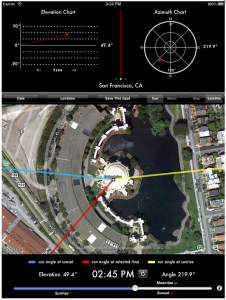
Have you ever planned an outdoor shoot and the weather literally rained on your parade? Well thanks to a new Apple application called “LightTrac” you may never have to face that problem again.

This new app can help photographers track the elevation as well as the angle of the Sun for any given date or location on our planet. What this means for the outdoor photographer is that you can plan your photoshoots ahead of time! We all know the weatherman isn’t exactly ‘honest abe’ so this app is useful even if you know your locations well.

There is also a complementing app named “Visimoon” that functions basically the same way for those night time shoots. LightTrac is available for 4.99 and Visimoon is for 2.99 for iPad, Android or iPhone.

camera, film, frames, million, photo, photographic, rental, video

A camera that shoots one million frames per second!

A camera that shoots one million frames per second? Here it is, the Phantom v1610, it can shoot up to 1,000,000 fps.

This new digital high speed camera shoots videos at a speed of 16,000 fps, at a resolution of 1280 x 800. However, it can shoot 1 million fps if the number of pixels is reduced to 128 x 16. It does sacrifice quality for speed, but still impressive.

Camera, film, frames, million, photo, photographic, rental, video

Phantom v1610 Camera


The camera has a custom-designed sensor of 28 micro pixels, ensuring excellent light sensitivity, 12 bit depth, and monochrome ISO of 16,500 T (ISO 12232 SAT method).

So this camera is really not for an everyday videographer or filmmaker, but it’s an awesome tool for scientists and researchers for capturing high resolution images or high speed videos.

Camera, film, frames, million, photo, photographic, rental, video

Phantom v1610 camera

The company has prices it out at $100,000 USD

camera, film, photo, photographic, photography, red, redepic, toronto, video

The Hobbit, the 3D secret

Shooting the new movie “The Hobbit” in 3D with the most “sophisticated and capable” camera ever engineered and built. Peter Jackson is using 48 RED Epic digital cameras, with the most advanced processor in the world, offers a 5K Mysterium X sensor, captures up to 120 frames per second, each frame at 14MP resolution. The camera also provides a 35 mm motion film resolution  with an extended dynamic range of up to 18 stops. Since the movie is shot in 3D, all the  cameras must be positioned at precise distances from each other in order to achieve the 3D effect. In a package one third of a RED ONE’s size, the camera needs custom camera rings for the lenses to fit, which made it almost impossible to place them at the right distance. The filmmakers had to order custom camera rings from 3ality Technica  to create specialized mounts for the cameras.  The specialized mounts uses a mirror system that allows a one eye camera to shoot into the mirror, and the other eye camera to bounce off the mirror, where operators can change the distances between the camera lenses, allowing them for a view similar to the human eyes, making it look more believable! Fascinating!

Camera, film, photo, photographic, photography, red, redepic, Toronto, video

THE RED EPIC


Camera, film, photo, photographic, photography, red, redepic, Toronto, video

Two RED EPIC cameras to create 3D

The movie won’t be released until December of 2012, but it could be the best looking 3D film ever.