Tag: photography

film, focus, photo, photographic, photography, shutter, video, zoom

Lytro camera, the “focus later” camera!

Last week, Lytro introduced a new and  most interesting camera!  A camera that can take pictures of any thing and have it in focus, no matter your distance to the subject. Here is how it works, it’s is a still camera with no auto-focus motor and no stutter delay, it allows you to focus after taking the picture, on your computer using the software that comes with it, and you can get a number of stories from one photograph, fascinating! It’s a fairly small camera with two buttons (the power and the shutter buttons), a touch screen, a slide to control the zooming, and an 8X optical zoom lens with a constant aperture of f/2.

film, focus, photo, photographic, photography, shutter, v, video, zoom

film, focus, photo, photographic, photography, shutter, v, video, zoom


It’s built for Mac OS and requires a minimum of OS  x 10.6  or higher. They’re still developing a windows application.

So, the question now, is how to get one of these cool cameras! You can pre-order it from the lytro official website starting at $399 for the 8GB camera, and $499 for the 16 GB, and you can get it early 2012.

film, focus, photo, photographic, photography, shutter, v, video, zoom

The science behind Lytro camera:

15 years ago, Stanford University captured the most advanced light field, which required a roomful of cameras all connected to a supercomputer. The supercomputer has been replaced by a combination of hardware and software called the  1.0 light field engine, which is able to process the light ray data captured by the sensor using a series if complex algorithms . The light field sensor captures up to 11 million light rays, which allows you to re-focus the pictures later on.

Stop Motion Animation

First of all, what is stop motion?

Stop motion is another way of creating film, but instead you’re using a bunch of photos of and playing them at a high speed to give the illusion that it’s moving.

For example: the movie ‘Wallace and Gromit The Curse of The Were Rabbit’, the characters were made out of clay. Which is called claymation (clay animation) How it works, is they use clay to sculpt their subject like Wallace, then place him into a set. Then they take a picture of him, and depending on what they want him to do, they slightly move a part of him then proceed to take another picture. After multiple pictures later, it’ll look like that the character is moving on it’s own. Clay isn’t the only way to create stop motion films, other people use Legos as well. The main idea of stop motion is just to create the effect that an inanimate object can move on it’s own.

stop motion, behind the scenes stop motion, behind the scenes

When creating your own stop motion, you’ll need a few things. First a camera, it doesn’t matter what kind of camera, as long as you can import it’s images into your computer. Which is for post production (editing). You’ll also need lighting, preferably indoor lighting. If you use outdoor lighting (the sun) then the stop motion will look funny. Why? well because stop motion takes time, and as you may be shooting outside, the sun might be blocked by clouds and affect your scene. Another thing that is very crucial for stop motion animation, is a tripod. Having a tripod is the most important thing in creating stop motion. You can still do it without a tripod, but your creation will look very shaky. Once you have these, all you need now is your subject.

Stop motion isn’t always necessarily about making inanimate objects come to life, you can also achieve cool effects with just a person. For example: have a friend jump in place, and while mid-air take a photo, have him/her repeat this and after every jump, have them move up one step. If done correctly, it will look like your friend is flying in the air.

photo, photographic, photography

Stolen image ends up all over the world

In 2006 Noam Galai took a few photos of himself and uploaded them to his Flickr account. He got a few comments from people who liked it but nothing more. Then one day a friend asked him why didn’t he tell them that he was making t-shirts of his photo. At first he didn’t believe them then he saw one for himself. He went online and did a reverse image search using TinEye and was shocked at how prolific his image had become, all without his permission. It is even being used as a symbol of protest in Iran.

The people at Fstoppers are responsible for this great video entitled “The Stolen Scream”, it details his story, and how he has become an anonymous and uncredited global icon. Ironicaly he tried to sell the photo to Getty Images, and they told him there was no market for it.

In the Video Galai says that National Geographic are the only company who paid him for his photo. He also says the photo has been used in 40 countries and is still counting. A cautionary tale to say the least.

The Stolen Scream: A Story About Noam Galai from FStoppers on Vimeo.

film, photo, photographic, photography, technology, video

LightTrac 2.0 – A Convenient Tool for the Outdoor Photographer

film, photo, photographic, photography, technology, video

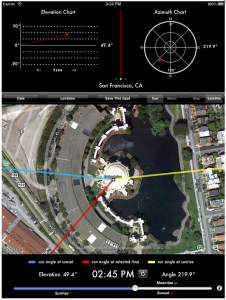
Have you ever planned an outdoor shoot and the weather literally rained on your parade? Well thanks to a new Apple application called “LightTrac” you may never have to face that problem again.

This new app can help photographers track the elevation as well as the angle of the Sun for any given date or location on our planet. What this means for the outdoor photographer is that you can plan your photoshoots ahead of time! We all know the weatherman isn’t exactly ‘honest abe’ so this app is useful even if you know your locations well.

There is also a complementing app named “Visimoon” that functions basically the same way for those night time shoots. LightTrac is available for 4.99 and Visimoon is for 2.99 for iPad, Android or iPhone.

camera, film, photo, photographic, photography, red, redepic, toronto, video

The Hobbit, the 3D secret

Shooting the new movie “The Hobbit” in 3D with the most “sophisticated and capable” camera ever engineered and built. Peter Jackson is using 48 RED Epic digital cameras, with the most advanced processor in the world, offers a 5K Mysterium X sensor, captures up to 120 frames per second, each frame at 14MP resolution. The camera also provides a 35 mm motion film resolution  with an extended dynamic range of up to 18 stops. Since the movie is shot in 3D, all the  cameras must be positioned at precise distances from each other in order to achieve the 3D effect. In a package one third of a RED ONE’s size, the camera needs custom camera rings for the lenses to fit, which made it almost impossible to place them at the right distance. The filmmakers had to order custom camera rings from 3ality Technica  to create specialized mounts for the cameras.  The specialized mounts uses a mirror system that allows a one eye camera to shoot into the mirror, and the other eye camera to bounce off the mirror, where operators can change the distances between the camera lenses, allowing them for a view similar to the human eyes, making it look more believable! Fascinating!

Camera, film, photo, photographic, photography, red, redepic, Toronto, video

THE RED EPIC


Camera, film, photo, photographic, photography, red, redepic, Toronto, video

Two RED EPIC cameras to create 3D

The movie won’t be released until December of 2012, but it could be the best looking 3D film ever.